Evaluate Reflection

    The Evaluate module has prepared me to meet each standard.  An example of each standard is provided below:


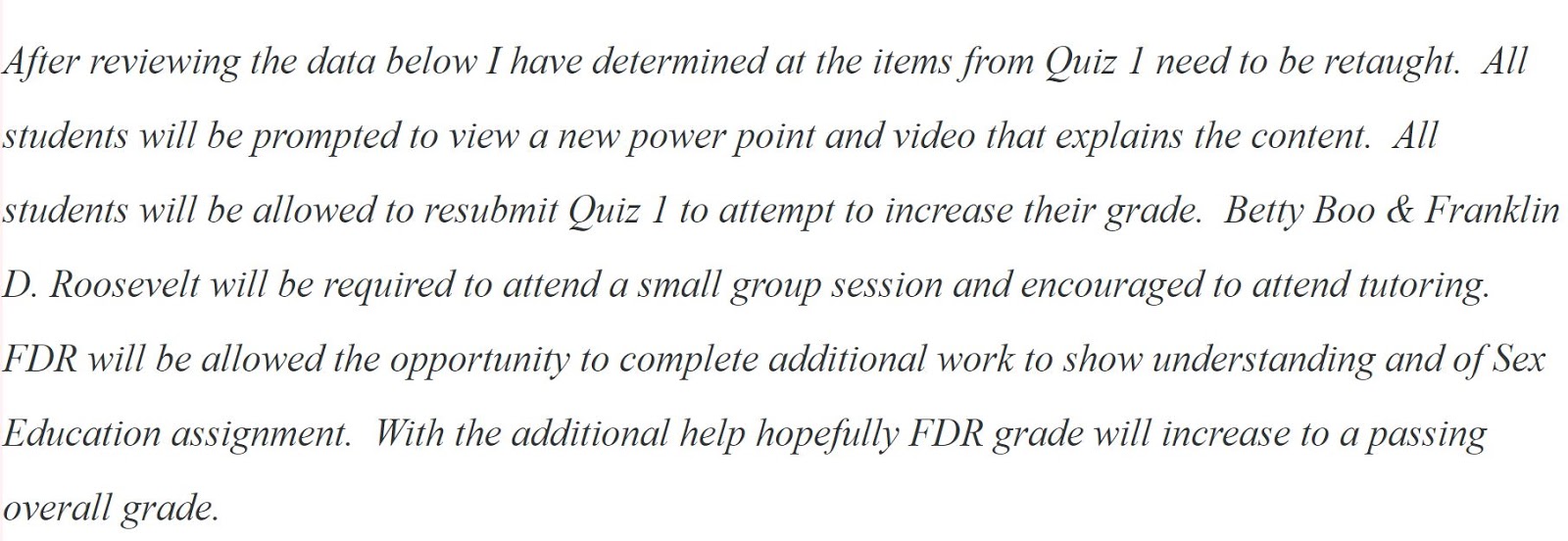
  • Standard D: Examples of effective feedback was provided showcasing clear expectations and communication between my student and I. Rubrics were provided showing the grading expectations.   Please see below.


  • Standard G, J, and I: The online teacher demonstrates competencies in creating and implementing assessments in online learning environments in ways that ensure validity and reliability of the instruments and procedures.

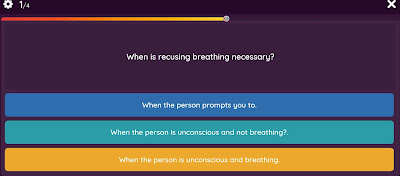
  • An written assessment  and an interactive quiz was created on Quizizz for students to access at a designated time.  The  assessment were valid because it covered information pertaining to the Georgia health standards.  Also the Quizizz assessment  was reliable because even if taken multiple times the correct answers always remained the same.  An example of a grading scale was provided and explanation of how students could improve their grade with additional guided instruction was explained.



The strategies I have taken away from the Evaluate module is providing frequent and detailed feedback.  I will continue to inform students, parents and stakeholders of student progress.  I will continue to offer students the ability to review course work that students did not pass in an attempt to retake an assessment to improve the grade.  


The lesson that were most beneficial to me was the online assessment creation .  I will utilize Quizizz often to reinforce information shared with students.  I really enjoyed creating the rubric for the skit.  I will continue to provide detail rubrics to support the student.  

Comments

Popular posts from this blog

Create 3 - Open Educational Resources

  Create : In your blog post, create a definition of open educational resources. The websites and photos are free to use or share, even commercially. https://mhealth.jmir.org/2019/3/e11163/ https://bmcnurs.biomedcentral.com/articles/10.1186/s12912-015-0071-0 https://jyd.pitt.edu/ojs/jyd/article/view/18-13-03-RES-01 https://journalistsresource.org/studies/society/public-health/income-students-summer-eating-exercise/ https://www.learntobehealthy.org/lessons-and-activities/?gclid=Cj0KCQjw4qvlBRDiARIsAHme6ou4hn3BCUTMSSAwpeThan-xd3bbo78X5S3QT7zUIhroN6Xwt6jNFrYaAq0zEALw_wcB https://www.science.edu/acellus/course/high-school-health/ These are the usage rights to choose from when exploring content. Not filtered by license Free to use or share Free to use or share, even commercially Free to use share or modify Free to use, share or modify, even commercially What are the various Creative Commons licenses one may encounter when searching for these resources?...

Create 4 - Learning Object Authoring Tools

An explanation  as to how learning tools can  be used in an online classroom is provided below: Dipity by Dipity:   Is an excellent tool for developing educational timelines. Users have the antonym to develop lesson plans thus allowing more flexible schedule.  Timelines will come alive with the use of visual aids and audio aids.   Dipsters  can incorporate  social media into their outline, using current updates. https://www.timetoast.com/timelines/dipity-online-timeline   2.   Quizizz--Quizizz is an interactive online gaming assessment learning tool.           Users are able to post quiz and access other quizzes to test their knowledge.      Also students can use this app to test their knowledge while competing with        others.   https://quizizz.com/  What features should an online teacher look for in a learning object tool? ...

Communicate 3 - Rubrics

Create : Utilizing one of the resources discussed in this lesson, create a rubric that integrates specific criteria for an assignment and also affords the instructor ample commentary on the student’s product. Make the rubric available in a post in your blog.